Stem Cell Therapy for Foot & Ankle Pain in Charlotte, NC
Chronic foot and ankle pain from plantar fasciitis, Achilles tendinopathy, ankle arthritis, or a tendon injury can limit every step of your day. Stem Cell Carolina offers advanced, image-guided stem cell therapy for foot and ankle conditions in Charlotte and Huntersville — a non-surgical alternative for patients looking to get back on their feet without the downtime of surgery.
Every treatment is performed by a board-certified physician in Physical Medicine & Rehabilitation with advanced training in interventional sports and spine medicine — and every injection is delivered under real-time ultrasound guidance for precision where it matters most.
Book a Free Consultation →
Why Foot & Ankle Conditions Are So Hard to Heal
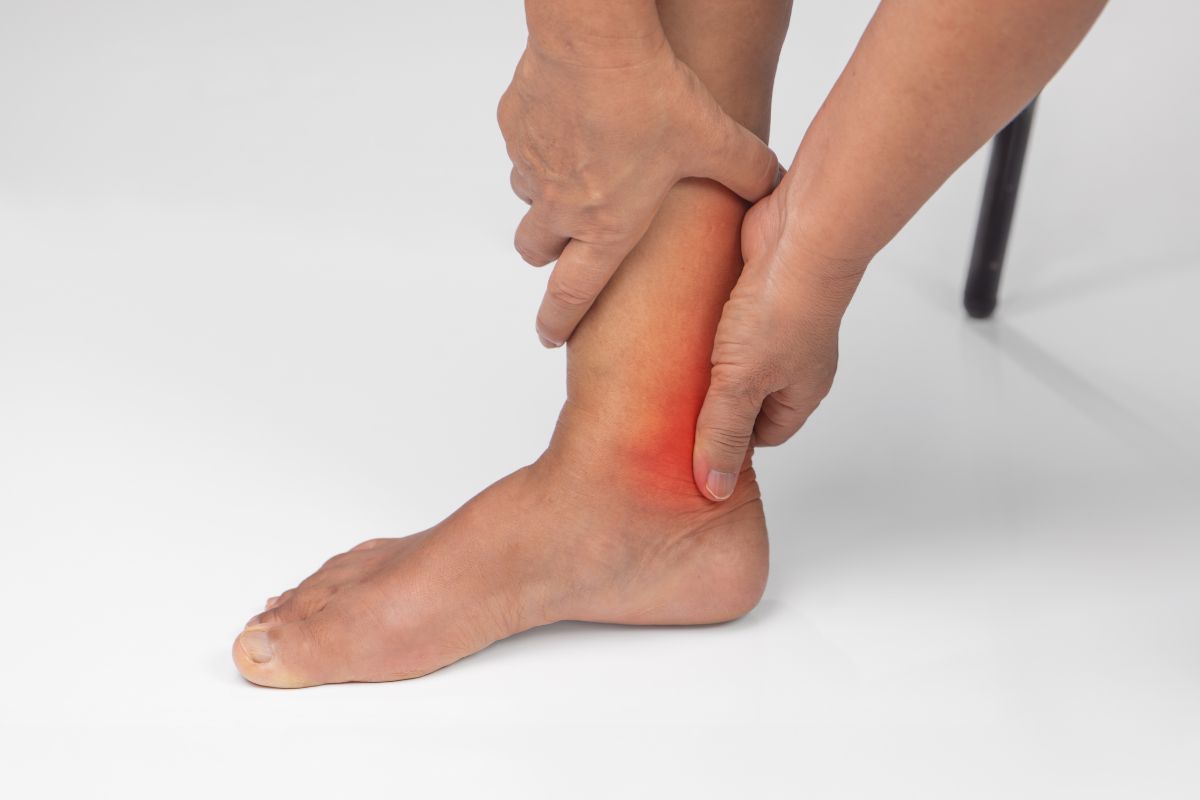
The foot and ankle are unlike any other area of the body treated with regenerative medicine. They bear the full weight of the body with every single step — approximately 1.5 times body weight with walking and up to 8 times body weight during running. This constant mechanical load makes rest genuinely difficult and natural tissue healing far slower than in upper extremity conditions.
The Achilles tendon, plantar fascia, and ankle ligaments have limited blood supply — which is precisely why injuries to these structures are so persistent. Without adequate blood flow, the body cannot deliver the healing cells these tissues need. This is the core reason why regenerative medicine is particularly valuable for foot and ankle conditions: stem cell therapy delivers the body’s own healing response directly to the tissue where it is needed most.
At Stem Cell Carolina, every foot and ankle injection is performed under real-time ultrasound guidance. In a region where structures are small, closely packed, and surrounded by major nerves and blood vessels, accurate placement is not optional — it is the standard of care at this clinic.
Struggling with foot or ankle pain that won’t resolve? Book a free consultation at Stem Cell Carolina →
Why Choose Stem Cell Carolina for Foot & Ankle Treatment in Charlotte?
Foot and ankle conditions require a level of diagnostic accuracy and injection precision that most generalist providers of regenerative orthopedic care in Charlotte cannot offer.
Foot & Ankle Conditions Treated with Stem Cell Therapy in Charlotte, NC
Stem Cell Carolina treats a wide range of foot and ankle conditions for patients across Charlotte, Huntersville, and the surrounding communities. Every patient receives a personalised treatment plan based on a thorough in-person physical examination.
Plantar Fasciitis & Chronic Heel Pain
Plantar fasciitis is one of the most common and stubbornly persistent foot conditions — causing sharp, stabbing heel pain that is typically worst with the first steps in the morning. It occurs when the plantar fascia ligament becomes chronically inflamed and degenerates at its attachment point on the heel bone. Cortisone injections can provide temporary relief but do not repair the underlying ligament degeneration — and repeated cortisone near the plantar fascia can further weaken the tissue. Stem cell therapy may help support the body’s natural healing response in the damaged plantar fascia, delivered under ultrasound guidance to the exact attachment point.
Achilles Tendinopathy & Partial Achilles Tears
Achilles tendinopathy causes pain, stiffness, and thickening of the Achilles tendon — most often at the midportion or insertion point at the heel. It is particularly common in runners, court sport athletes, and those who have experienced a sudden increase in activity. Partial Achilles tears involve structural disruption to the tendon fibres and are a serious injury that may benefit from regenerative treatment as an alternative to surgical repair. Stem cell therapy targets the damaged tendon tissue directly under ultrasound guidance, supporting the body’s natural healing response.
Why Cortisone Is Dangerous Near the Achilles
This is a critical point that many patients are not told: repeated cortisone injections near the Achilles tendon carry a documented risk of tendon rupture. Unlike other areas of the body where cortisone is an acceptable short-term measure, the Achilles is a load-bearing tendon where cortisone can further weaken already degenerated tissue. Stem cell therapy and PRP are significantly safer alternatives for Achilles conditions — addressing the underlying tissue damage rather than temporarily suppressing inflammation at structural cost.
Ankle Osteoarthritis
Ankle arthritis causes progressive cartilage breakdown in the ankle joint, leading to pain, stiffness, and swelling — particularly with walking, stair climbing, and uneven terrain. It is more commonly post-traumatic than knee or hip arthritis — often following an ankle fracture, chronic instability, or repeated sprains. Stem cell therapy may help support the body’s natural healing response in the arthritic ankle joint, offering a non-surgical alternative for patients looking to delay or avoid ankle fusion surgery.
Chronic Ankle Instability & Ligament Sprains
Chronic ankle instability occurs when lateral ankle ligaments — most commonly the ATFL and CFL — become lax following one or more sprains that were not given adequate time to heal. The result is a persistent feeling of the ankle giving way, recurring sprains, and chronic pain. Regenerative treatment to the stretched or partially torn ankle ligaments may help support the body’s natural healing response and improve ankle stability without surgical ligament reconstruction.
Peroneal Tendinopathy & Peroneal Tendon Tears
The peroneal tendons run along the outer ankle and are responsible for foot eversion and ankle stability. Peroneal tendinopathy causes outer ankle pain and is commonly misdiagnosed as a recurring ankle sprain. Partial peroneal tendon tears may benefit from regenerative treatment as an alternative to surgical repair. All peroneal tendon injections at Stem Cell Carolina are performed under ultrasound guidance to ensure the cells are delivered precisely to the affected tendon.
Posterior Tibial Tendon Dysfunction (PTTD)
Posterior tibial tendon dysfunction is the leading cause of progressive adult flat foot deformity. The posterior tibial tendon supports the arch of the foot — when it degenerates or tears, the arch collapses progressively over time, causing inner ankle pain and flat foot. In early and moderate stages, regenerative treatment to the posterior tibial tendon may help support the body’s natural healing response and slow the progression of the deformity — potentially avoiding the need for complex reconstructive foot surgery.
Lisfranc Injuries
The Lisfranc joint complex is where the midfoot meets the forefoot — a critical load-bearing area that can be injured in sports, falls, or vehicle accidents. Lisfranc sprains and partial ligament injuries can be debilitating and are notoriously difficult to heal given the constant load placed through the midfoot. For appropriate Lisfranc injuries — particularly partial ligament sprains without fracture or complete dislocation — regenerative treatment may offer an alternative to surgical fixation.
Foot & Ankle Tendinitis
Chronic tendinitis in the foot and ankle — whether of the flexor hallucis longus, posterior tibial, extensor tendons, or other structures — causes persistent pain that limits walking, sport, and daily activity. When cortisone injections have provided only temporary relief and the underlying tendon degeneration has not been addressed, stem cell therapy targeting the damaged tendon tissue may offer a more durable treatment pathway.
Morton’s Neuroma
Morton’s neuroma is a thickening of the nerve tissue between the third and fourth toes, causing burning pain, numbness, and the sensation of standing on a stone. Cortisone injections are commonly offered but often provide diminishing returns with repeated use. Nerve hydrodissection — an ultrasound-guided technique available at Stem Cell Carolina — may offer a non-surgical approach to releasing nerve compression, alongside or instead of regenerative injection therapy.
Foot & Ankle Arthritis (Subtalar, Midfoot, Toe Joints)
Arthritis can affect multiple joints in the foot — including the subtalar joint, midfoot joints, and the first metatarsophalangeal joint (big toe). Each of these small joints can be individually targeted and injected under ultrasound guidance at Stem Cell Carolina, addressing the specific arthritic joints contributing to your pain rather than treating the foot as a single unit.
Chronic Foot & Ankle Pain After Failed Treatment
Many patients who visit Stem Cell Carolina for foot and ankle pain have already had cortisone injections, physiotherapy, orthotics, and rest without achieving lasting relief. If an underlying tendon, ligament, or joint condition is identified on examination, regenerative treatment may offer a different pathway — addressing the tissue-level cause rather than managing symptoms. A thorough in-person assessment will determine whether this is appropriate.
The Cortisone Warning Every Achilles Patient Needs to Hear
Cortisone injections are one of the most commonly prescribed treatments for Achilles tendinopathy and heel pain — but for the Achilles tendon specifically, this is a treatment that carries documented clinical risk that many patients are never told about.
Multiple studies have confirmed that repeated cortisone injections near the Achilles tendon significantly increase the risk of tendon rupture — a catastrophic injury requiring surgical repair and months of rehabilitation. Unlike other soft tissue structures, the Achilles tendon is already under constant mechanical load with every step. Cortisone weakens the collagen structure of the tendon at a cellular level, and in an already degenerated tendon, this additional weakening can be the tipping point.
Stem cell therapy and PRP therapy are not only more effective for Achilles tendinopathy at 6 and 12 months than cortisone — they are significantly safer. Both approaches support the body’s natural healing response in the damaged tendon tissue rather than suppressing the inflammatory environment that the tendon needs to heal. For any patient with Achilles tendon pain, this distinction is critical.
Book a Free Consultation →
How Stem Cell Therapy for the Foot & Ankle Works
The full procedure is completed in-office at our Charlotte or Huntersville location — no hospital admission, no general anaesthesia, and no overnight stay required.
Free Consultation & Physical Exam
A thorough in-person assessment identifies the exact foot and ankle structures contributing to your pain. Imaging is reviewed but physical examination is where the treatment plan is confirmed and priced. Heel pain from plantar fasciitis and from Achilles tendinopathy can feel similar — accurate diagnosis matters.
Cell Harvest
Stem cells are collected from your own body using a minimally invasive in-office procedure. The source and protocol are selected based on your specific foot and ankle condition and the structures being treated.
Processing & Concentration
The harvested cells are processed and concentrated in our office to prepare the most effective therapeutic preparation for your individual treatment.
Ultrasound-Guided Injection
Under real-time ultrasound guidance, the treating physician injects the concentrated cells precisely into the targeted structure — plantar fascia, Achilles tendon, ankle joint, ligament, or tendon — ensuring accurate delivery where it is needed most.
Recovery & Return to Activity
Most patients manage with reduced weight-bearing for a short period and return to light activities within 1–3 days. A personalised rehabilitation plan guides the return to walking, sport, and full activity progressively over the following weeks and months.

Are You a Candidate for Stem Cell Therapy for Your Foot or Ankle?
Stem cell therapy for foot and ankle conditions may be appropriate if you:
- Have chronic plantar fasciitis or heel pain lasting 3 months or more
- Have Achilles tendinopathy or a partial Achilles tear
- Have received cortisone injections that only helped short-term — or are concerned about Achilles rupture risk
- Have chronic ankle instability or recurring ankle sprains
- Have ankle osteoarthritis limiting your walking and daily activities
- Have peroneal tendinopathy, PTTD, or another tendon condition
- Have a Lisfranc injury or midfoot pain
- Have been told ankle fusion or foot surgery is the next step
- Are a runner or athlete seeking to return to training without surgical downtime
- Have not achieved lasting relief through physical therapy, orthotics, or conservative care
Not every patient is a candidate. The treating physician at Stem Cell Carolina will give you an honest assessment of whether stem cell therapy or PRP is the most appropriate option at your free consultation.
Book Your Free Consultation →Stem Cell Therapy vs PRP Therapy for the Foot & Ankle
Both stem cell therapy and PRP therapy for ankle and foot pain are available at Stem Cell Carolina. The treating physician will recommend the most appropriate option based on your examination, condition severity, and treatment history.
Stem Cell Therapy
- Advanced or long-standing Achilles tendinopathy
- Partial Achilles or peroneal tendon tears
- Ankle osteoarthritis with significant cartilage involvement
- PTTD with structural tendon degeneration
- Cases that have not responded to PRP alone
- Patients looking to avoid ankle fusion or foot surgery
PRP Therapy
- Plantar fasciitis — often the most appropriate first-line treatment
- Mild to moderate Achilles tendinopathy
- Chronic ankle instability and ligament sprains
- Early ankle arthritis
- May be combined with stem cell therapy for optimal outcomes
- Learn more about PRP for ankle pain →
For Morton’s neuroma and nerve-related foot conditions, nerve hydrodissection may be recommended alongside or instead of regenerative injection therapy. This is discussed at your free consultation based on your specific findings.
What to Expect: Foot & Ankle Stem Cell Therapy Recovery
Recovery from stem cell therapy for the foot and ankle is significantly less disruptive than surgical recovery. Individual outcomes vary based on condition severity and overall health.
Important: Treatment suitability cannot be confirmed without an in-person physical examination. Stem cell therapy may not be appropriate for all foot and ankle conditions — the treating physician will advise honestly at your free consultation at Stem Cell Carolina.
Stem Cell Therapy for Foot & Ankle Pain: Frequently Asked Questions
Can stem cell therapy treat plantar fasciitis?
Yes — though PRP therapy is often the more appropriate first-line regenerative treatment for plantar fasciitis, as it is highly effective for this condition and more cost-efficient. For advanced or long-standing plantar fasciitis that has not responded to PRP or cortisone, stem cell therapy may offer a stronger regenerative response targeting the degenerated plantar fascia tissue. The treating physician at Stem Cell Carolina will assess your specific case and recommend the most appropriate approach at your free consultation.
Is cortisone safe for Achilles tendon pain?
This is an important question that every Achilles tendon patient should ask. Repeated cortisone injections near the Achilles tendon carry a documented risk of tendon rupture — a serious injury requiring surgery and months of recovery. Unlike many other tendon and joint conditions where cortisone is a reasonable short-term measure, the Achilles is under constant load and already compromised in tendinopathy patients. Stem cell therapy and PRP therapy are significantly safer alternatives that support the body’s natural healing response in the damaged tendon rather than further weakening its structure.
Can stem cell therapy help chronic ankle instability?
Yes. Chronic ankle instability — resulting from lax lateral ankle ligaments following one or more sprains — is a condition where regenerative treatment may help support the body’s natural ligament healing response. Stem cells or PRP are injected under ultrasound guidance directly into the affected ligaments (most commonly the ATFL and CFL). Outcomes depend on the degree of ligament laxity, the duration of instability, and the patient’s activity level. Very severe instability with complete ligament disruption may require surgical reconstruction, assessed at your free consultation.
Can stem cell therapy treat ankle arthritis?
Yes. Ankle osteoarthritis — particularly post-traumatic arthritis following an old ankle fracture or years of chronic instability — may respond to regenerative treatment as a non-surgical alternative to ankle fusion. Stem cells are injected into the ankle joint under ultrasound guidance to help support the body’s natural healing response in the arthritic cartilage. Results depend on the severity of cartilage loss. Moderate ankle arthritis typically responds better than severe bone-on-bone arthritis, assessed honestly at your consultation.
What is PTTD and can it be treated with stem cell therapy?
Posterior tibial tendon dysfunction (PTTD) is the degeneration of the posterior tibial tendon — the main tendon supporting the arch of the foot. When this tendon fails, the arch progressively collapses, causing inner ankle pain and flat foot deformity. In early to moderate stages, regenerative treatment to the posterior tibial tendon under ultrasound guidance may help support the body’s natural healing response and slow the progression of the condition. Advanced or late-stage PTTD with significant flat foot deformity may require surgical reconstruction. This is assessed at your in-person consultation at Stem Cell Carolina.
Can stem cell therapy help with a Lisfranc injury?
For partial Lisfranc ligament injuries without fracture or significant dislocation — particularly in athletes who want to avoid surgical fixation — regenerative treatment may offer an alternative worth exploring. The Lisfranc complex is a critical load-bearing area that is notoriously difficult to rest, and natural healing is challenging given the constant forces through the midfoot. Stem cells or PRP delivered under ultrasound guidance to the Lisfranc ligaments may help support the healing response. Significant Lisfranc fracture-dislocations typically require surgical management. A thorough in-person assessment at Stem Cell Carolina will determine candidacy.
How many sessions are needed for foot and ankle stem cell therapy?
Most patients require a single treatment session for stem cell therapy. All relevant foot and ankle structures identified at your examination are treated at the same visit at a single price. Whether a follow-up PRP booster treatment is recommended will be discussed at your consultation based on your specific condition and response to the initial treatment.
Does insurance cover stem cell therapy for foot and ankle pain in Charlotte, NC?
No — insurance does not cover stem cell therapy for foot and ankle conditions as it is classified as a regenerative treatment. Most flexible spending accounts (FSA) and health savings accounts (HSA) can be used. Full, transparent pricing is provided at your free consultation at Stem Cell Carolina with no obligation.
How long does stem cell therapy for foot and ankle conditions last?
For tendon conditions like Achilles tendinopathy and plantar fasciitis, regenerative treatment typically produces results lasting several years — and some tendon cases resolve entirely. For ankle arthritis, outcomes are similarly durable for moderate cases. Individual outcomes depend on the condition being treated, its severity, the patient’s activity level, and whether footwear and activity modifications are maintained after treatment. Results do not prevent re-injury — continued loading without appropriate modification may contribute to recurrence.
Do I need a referral to book a foot and ankle consultation at Stem Cell Carolina?
No referral is required. You can book a free consultation directly through our website or by calling 704-542-3988. We accept patients from Charlotte, Huntersville, Ballantyne, SouthPark, Lake Norman, Cornelius, Davidson, Mooresville, Matthews, Fort Mill, and across the greater Charlotte area.
What Our Patients Say
Stem Cell Carolina patients across Charlotte and Huntersville share their experiences with regenerative foot, ankle, and joint treatment.




Stem Cell Therapy for Foot & Ankle Pain — Charlotte & Huntersville, NC
Stem Cell Carolina offers specialist regenerative medicine at two convenient locations across the greater Charlotte area.
Charlotte Office — Providence Road
8035 Providence Road, Suite 340
Charlotte, NC 28277
Near the Arboretum Shopping Center.
Serving: Ballantyne, SouthPark, Myers Park,
Matthews, Pineville, Fort Mill, and South Charlotte.
Free on-site parking available.
Huntersville Office — Lake Norman Area
9920 Kincey Ave, Suite 200
Huntersville, NC 28078
Serving: Huntersville, Cornelius, Davidson,
Mooresville, Concord, and the Lake Norman area.
Free on-site parking available.