Labral Tear Treatment Without Surgery in Charlotte, NC: Stem Cell Therapy and PRP

Our board-certified team, with over 30,000 spine and joint injections performed, treats shoulder and hip labral tears without surgery at our Charlotte and Huntersville offices.
Key takeaways
- A labral tear is damage to the ring of cartilage that lines the shoulder socket or hip socket. It can cause deep joint pain, clicking, catching, or a feeling that the joint is unstable.
- The labrum has a limited blood supply, which is one reason tears can be slow to settle on their own.
- PRP and stem cell therapy are non-surgical options that may help support the natural healing of the labrum and the structures around it.
- Whether treatment is right for you depends more on your symptoms, examination, age, and activity goals than on the tear label on your MRI.
- We treat labral tears at our Charlotte and Huntersville offices, with every injection placed under real-time ultrasound guidance.
What Is a Labral Tear?
A labral tear is an injury to the labrum, a ring of firm cartilage that lines the rim of the shoulder socket or the hip socket. The labrum deepens the socket, cushions the joint, and helps hold the ball of the joint in place. When it tears, the joint can hurt, catch, click, or feel unstable.
Shoulder labral tears
In the shoulder, the labrum surrounds the shallow socket (the glenoid) and anchors the biceps tendon and several ligaments. Tears at the top of the labrum, where the biceps attaches, are called SLAP tears. Tears at the front and bottom of the socket often follow a dislocation. Common causes include a fall onto an outstretched arm, repetitive overhead activity such as throwing or weightlifting, and gradual wear that becomes more common from around age 30 to 40.
Hip labral tears
In the hip, the labrum lines the rim of the socket (the acetabulum) and helps seal the joint. Hip labral tears are often linked to structural problems such as femoroacetabular impingement, where extra bone pinches the labrum, or a shallow hip socket. They can also follow an injury or develop from repetitive twisting and pivoting in sports like golf, soccer, and hockey.
| Shoulder labral tear | Hip labral tear | |
|---|---|---|
| Where it hurts | Deep in the shoulder, often with overhead movement | Front of the hip or groin, sometimes the side or buttock |
| Mechanical signs | Catching, popping, grinding, or a feeling the shoulder may slip | Locking, clicking, catching, or stiffness |
| Common causes | Falls, dislocation, throwing, weightlifting, age-related wear | Hip impingement, a shallow socket, twisting sports, injury |
| Often found alongside | Rotator cuff or biceps tendon problems, shoulder arthritis | Hip impingement, early hip arthritis |
Symptoms of a Labral Tear
The most common symptoms of a labral tear are deep joint pain that worsens with activity, a clicking, catching, or locking sensation, stiffness, and a feeling that the joint is unstable. Some labral tears cause no symptoms at all and are found by chance on an MRI.
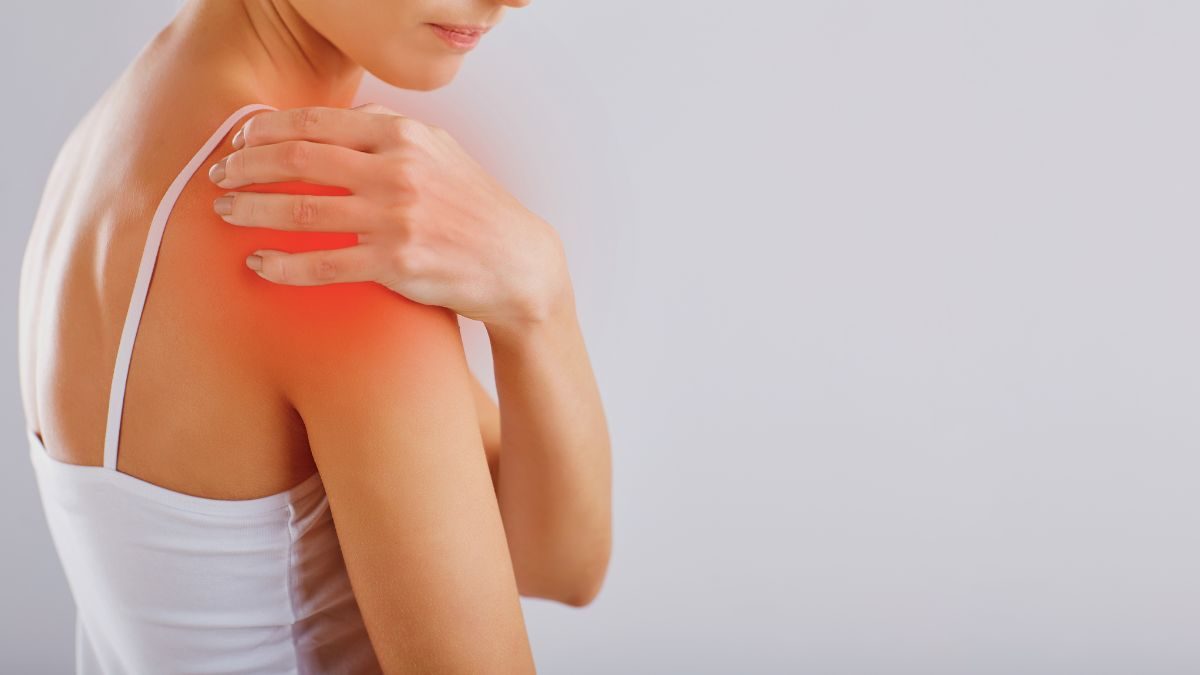
- Deep, aching pain in the shoulder, hip, or groin that worsens with activity or certain positions
- Clicking, popping, locking, or catching inside the joint
- Stiffness or a reduced range of motion
- Weakness, especially when lifting the arm overhead
- A feeling that the shoulder may slip out of place or the hip may give way
- Hip or groin pain that builds with long periods of sitting, standing, or walking
When to get it checked: if your symptoms have not improved after about six weeks of rest and activity changes, or if the joint locks or gives way, it is time for a specialist examination.
Can a Labral Tear Heal Without Surgery?
Many labral tears are managed without surgery. Physical therapy, activity changes, and anti-inflammatory medicine are the usual first steps, and for shoulder SLAP tears, the American Academy of Orthopaedic Surgeons notes that nonsurgical care is usually tried first. When pain persists, regenerative treatments such as PRP and stem cell therapy may help support healing.
The challenge is blood supply. The labrum receives relatively little blood flow, especially toward its inner edge, so a tear may linger even with good rehab. Steroid injections can calm inflammation for a while, but they are not designed to support tissue repair, and repeated steroid injections are generally limited. You can read more in our comparison of PRP therapy vs cortisone shots.
How Stem Cell Therapy and PRP Treat Labral Tears
Regenerative treatment places concentrated healing components from your own body directly into the torn labrum and any other injured structures in the joint. The aim is to support the natural repair process that limited blood flow makes difficult, so the joint can become less painful and work better without surgery.
PRP therapy
Platelet-rich plasma (PRP) is made from a small sample of your own blood. The sample is processed to concentrate platelets, which carry growth factors involved in tissue repair. We use a high-concentration PRP preparation, aiming for one well-placed treatment rather than a series of weaker injections. Learn more on our pages for PRP for shoulder pain and PRP for hip pain.
Stem cell therapy
Stem cell therapy uses regenerative cells collected from your own body during the same visit. These cells may help support the repair of damaged cartilage and soft tissue, which makes stem cell therapy a common choice when a labral tear sits alongside joint wear or arthritis. See how we approach stem cell therapy for the shoulder and stem cell therapy for the hips.
Every structure, treated precisely
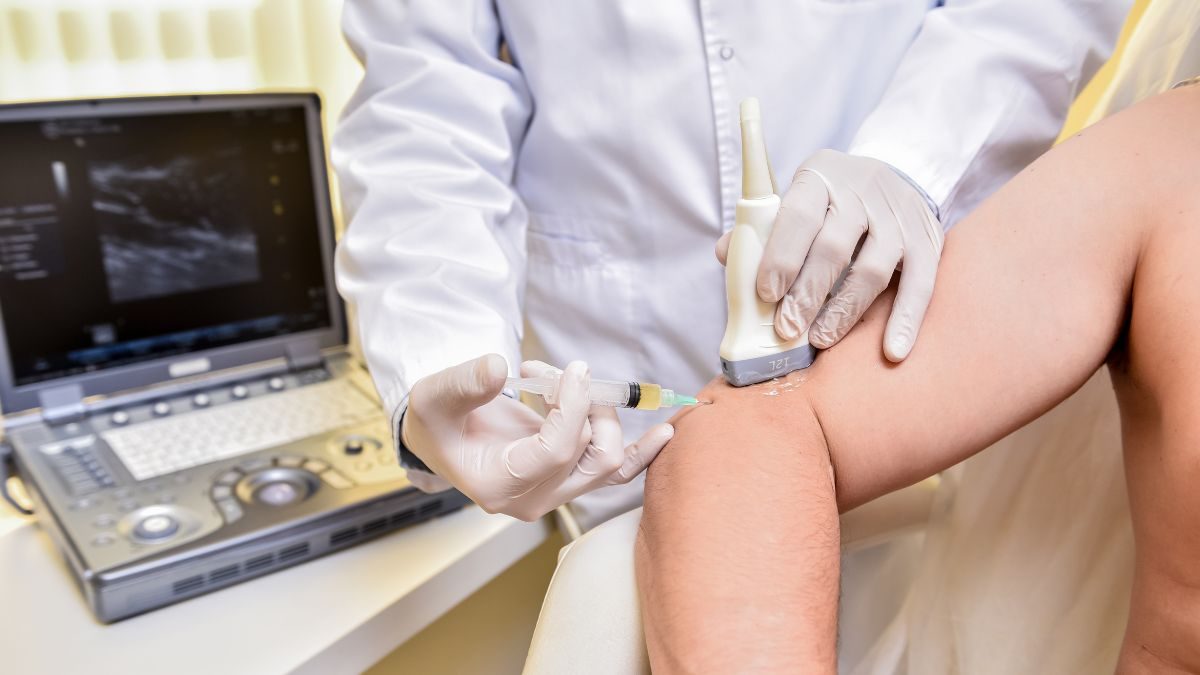
Every injection is performed under real-time ultrasound guidance, so treatment goes exactly where it is needed. The labrum is often not the only problem. A shoulder might have a labral tear, early arthritis, and an irritated biceps tendon at the same time. When the examination finds more than one source of pain, each of those structures can be treated individually in the same visit.
Why Age and Activity Matter More Than the Tear
Two people can have almost identical labral tears on MRI and need very different treatment plans. What matters most is how the tear behaves on examination, the health of the rest of the joint, your age, and what you want to get back to doing.
A 17-year-old pitcher with a tear from repetitive throwing usually has an otherwise healthy joint. The goal is to support healing of the labrum and build a careful, staged return to sport. A 67-year-old with a labral tear often has other changes in the same joint, such as cartilage wear or tendon degeneration, and the tear may be only one source of pain. In that case, treating the whole joint matters more than treating the tear alone.
This is why our recommendations come from a hands-on examination rather than an MRI report alone. The American Academy of Orthopaedic Surgeons likewise notes that treatment decisions for SLAP tears depend on factors such as age and activity level, not just the type of tear. Read more about why a physical exam comes first.
PRP vs Stem Cell Therapy for Labral Tears
| PRP therapy | Stem cell therapy | |
|---|---|---|
| What it uses | Concentrated platelets from your own blood | Regenerative cells collected from your own body |
| How it may help | Delivers growth factors that support the natural repair process | Supports repair of cartilage and soft tissue, including in joints with more wear |
| Often used for | Soft tissue injuries and mild to moderate joint wear | Complex soft tissue injuries and more advanced joint wear |
| Guidance | Real-time ultrasound | Real-time ultrasound |
| Setting | Same-day outpatient procedure | Same-day outpatient procedure |
Some patients benefit from a combination of both. Your physician recommends the approach that fits your examination rather than a one-size-fits-all package. For a deeper comparison, read the difference between stem cell therapy and PRP therapy.
Who Is a Good Candidate?
You may be a good candidate for regenerative treatment if a labral tear is causing ongoing pain that has not settled with rest or physical therapy, and you would like to avoid or delay surgery. The final answer always comes from a hands-on examination.
Regenerative treatment may suit you if
- Shoulder or hip pain from a labral tear has not improved with rest, activity changes, or physical therapy
- You want to avoid or delay surgery, or surgery is not a good option for you
- Your tear sits alongside early to moderate joint wear or tendon irritation
- You are an active adult or athlete who wants to get back to training, sport, or work
When surgery may be the better option
- Repeated dislocations, or a shoulder that keeps slipping out of place
- A joint that frequently locks because a torn fragment is caught inside it
- Significant structural problems, such as major hip impingement, that are driving the tear
- A complete tendon tear alongside the labral tear
If your examination suggests surgery is the better route, we will tell you and help you take the next step. Still unsure? Read are you a good candidate for stem cell therapy.
What to Expect
- Initial consultation. Your visit includes a full history, a hands-on orthopedic examination, range-of-motion testing, a treatment recommendation, and a pricing discussion. Bring any MRI or X-ray reports you already have. Book your initial consultation.
- Treatment day. Treatment is a same-day outpatient procedure. Every injection is placed under real-time ultrasound guidance, and each structure that needs treatment is addressed in the same visit.
- Recovery and rehab. Some soreness for a few days is normal. A guided physical therapy and activity plan is an important part of treatment, not an optional extra, and improvement usually builds gradually over the following weeks and months.
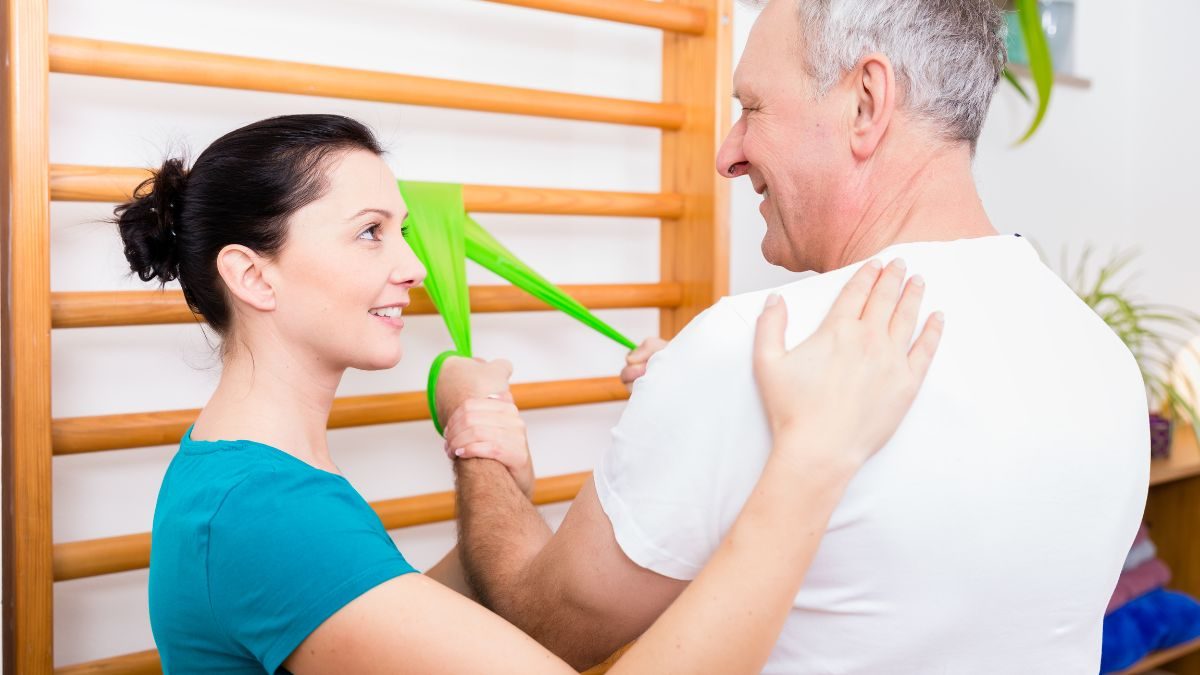
Protecting your results: treatment does not prevent a new injury. If your tear came from a throwing motion, lifting technique, or training load, addressing those factors with your therapist helps protect your progress. See what to expect at a PRP appointment for more detail.
Labral Tear Treatment in Charlotte and Huntersville
Stem Cell Carolina treats shoulder and hip labral tears at two offices in the Charlotte area. All regenerative procedures are performed at our Charlotte and Huntersville locations.
8035 Providence Road, Suite 340
Charlotte, NC 28277
Near the Arboretum. Convenient for Ballantyne, SouthPark, Matthews, Pineville, and Fort Mill, SC.
9920 Kincey Ave, Suite 200
Huntersville, NC 28078
Convenient for Lake Norman, Cornelius, Davidson, and Mooresville.
Frequently Asked Questions
Can stem cell therapy repair a torn labrum?
Stem cell therapy is intended to support the body's natural repair of damaged tissue, including the labrum and the cartilage around it. It is not a guaranteed fix, and results vary from person to person. For many patients, the goal is meaningful pain relief and better function without surgery. Your examination determines whether it is a good fit.
Is PRP or stem cell therapy better for a labral tear?
Neither is better for everyone. PRP concentrates growth factors from your own blood, while stem cell therapy uses regenerative cells from your own body and is often considered when a joint shows more wear. Some patients receive both in the same visit. Your physician recommends the option that fits your exam, age, and activity goals.
Can a hip labral tear heal without surgery?
Many hip labral tears are managed without surgery, and physical therapy is usually the first step. When pain persists despite good rehab, PRP or stem cell therapy may help support healing of the labrum and surrounding tissue. Tears driven by significant structural problems in the hip, such as major impingement, may still need a surgical opinion.
How long is recovery after a labral tear injection?
Treatment is a same-day outpatient procedure, and most patients go home soon after. Some soreness for a few days is normal. Improvement is gradual and usually builds over the following weeks and months, supported by a guided rehab plan. Return to sport or heavy lifting is staged based on how your joint responds.
Do I need an MRI before my consultation?
No. If you already have an MRI, bring it, because it is useful. Imaging alone never tells the full story, though. Many people have labral tears on MRI that cause no pain at all, so a hands-on examination is what shows whether the labrum is actually the source of your symptoms.
Does insurance cover PRP or stem cell therapy for a labral tear?
Most insurance plans do not cover PRP or stem cell therapy, so treatment is self-pay. HSA and FSA funds can be used, and financing is available through our third-party partners, CareCredit and Advance Care. Exact pricing is discussed after your examination, because it depends on which structures need treatment.
Where can I get labral tear treatment near Charlotte?
Stem Cell Carolina treats shoulder and hip labral tears at two offices: Providence Road in Charlotte, near the Arboretum, and Kincey Avenue in Huntersville. Both are convenient for patients across the Charlotte area, including Ballantyne, SouthPark, Matthews, Fort Mill, Lake Norman, Cornelius, and Davidson.
Find out if your labral tear can be treated without surgery
Get a hands-on examination and a clear treatment plan at our Charlotte or Huntersville office.
References
- SLAP Tears in the Shoulder, American Academy of Orthopaedic Surgeons (OrthoInfo)
- Femoroacetabular Impingement, American Academy of Orthopaedic Surgeons (OrthoInfo)
- Hip labral tear: Symptoms and causes, Mayo Clinic