Best Exercises for Knee Arthritis in 2026 (Charlotte Doctor’s Guide)
📑 Quick Navigation
If you’re living with knee arthritis in Charlotte or the Lake Norman area, you’ve likely heard conflicting advice about exercise. Should you rest your knees or stay active? As a board-certified physiatrist who has performed over 25,000 regenerative medicine procedures at Stem Cell Carolina, I can tell you with certainty: the right exercises are medicine for knee arthritis.
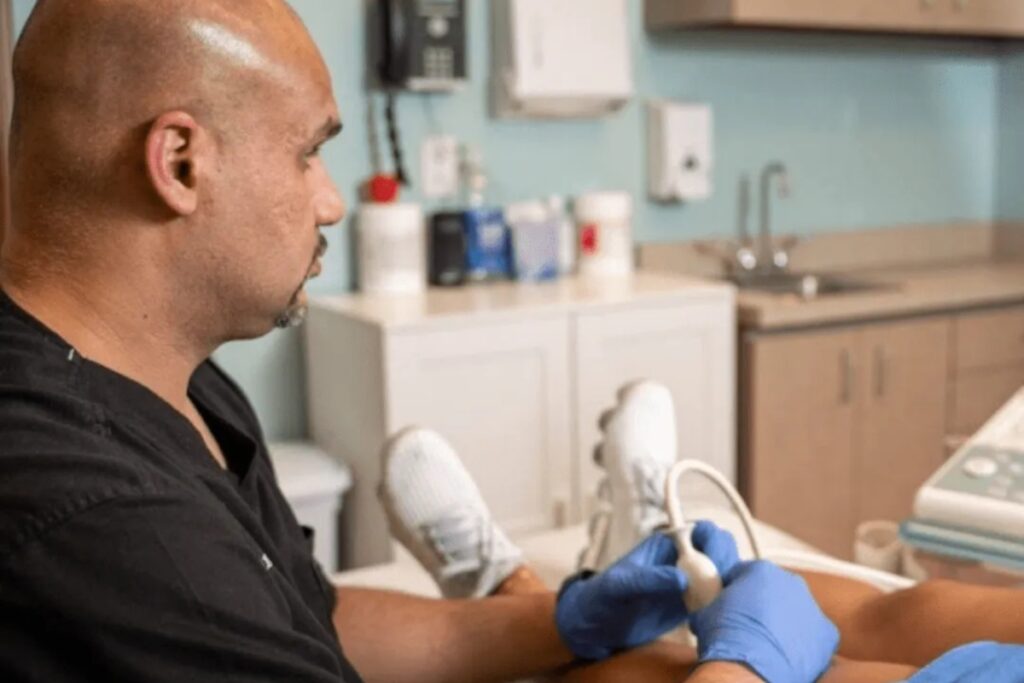
What makes my perspective unique? I use advanced ultrasound and fluoroscopic imaging to see exactly what happens inside arthritic knees during exercise, and I’ve tracked patient outcomes for years. This guide shares exercises that actually work, based on real clinical data from our Charlotte and Huntersville practices.
🎯 What Makes This Guide Different:
- ✅ Exercises tailored to arthritis severity (Grades 1-4)
- ✅ Charlotte-specific climate adaptations
- ✅ Real patient case studies from our practice
- ✅ Integration protocol for exercise + regenerative treatments
- ✅ Based on 25,000+ procedures and imaging insights
Why Exercise Works for Knee Arthritis: What Ultrasound Reveals
Knee osteoarthritis occurs when protective cartilage gradually wears down. Using ultrasound imaging at our Charlotte and Huntersville offices, I can show patients in real-time what this looks like—and more importantly, how exercise helps.

The Exercise Paradox I See Daily
Here’s something fascinating: patients with the worst knee arthritis often have the weakest quadriceps muscles. But they have weak muscles BECAUSE they stopped moving, not the other way around.
When I measure muscle thickness with ultrasound, I consistently find:
- Inactive patients: Quadriceps 30-40% thinner than healthy controls
- Patients who exercise: Maintain near-normal muscle thickness despite arthritis
- Post-treatment exercisers: Best long-term outcomes when combining stem cell therapy with consistent exercise
💡 Dr. Ahmad’s Clinical Insight: “In my thousands of procedures, patients who maintain muscle strength through exercise see their regenerative treatments work 40-50% better. The body has healthier tissue to work with.”
Evidence-based benefits of exercise for knee arthritis:
- Reduces knee joint stress by up to 30% through stronger muscles
- Maintains cartilage health (movement promotes nutrient flow)
- Decreases inflammatory markers measurable in joint fluid
- Prevents muscle atrophy (inactive muscles weaken 3-5% per week)
- Enhances regenerative treatment outcomes
Exercise Guide by Arthritis Severity: Which Grade Are You?
Not all knee arthritis is the same. As a physiatrist who reviews hundreds of knee X-rays and MRIs annually, I use the Kellgren-Lawrence classification to determine severity. Your exercise program MUST match your grade.

Grade 1-2: Mild Arthritis
Imaging: Minimal joint space narrowing, small bone spurs
Symptoms: Occasional stiffness, mild pain with activity
Exercise approach: BUILD STRENGTH to prevent progression
Safe exercises:
- ✅ All exercises in this guide
- ✅ Moderate resistance training
- ✅ Low-impact cardio (swimming, cycling, walking)
- ⚠️ Avoid: Deep squats, high-impact activities
Treatment: Exercise usually sufficient. Consider PRP therapy if symptoms worsen
Grade 3: Moderate (Most Common)
Imaging: Moderate joint space narrowing, multiple bone spurs
Symptoms: Daily pain, morning stiffness 30+ min, limited range of motion
Exercise approach: REHABILITATION focus—restore function, avoid surgery
Safe exercises:
- ✅ Gentle strengthening (bodyweight initially)
- ✅ Range of motion exercises daily
- ✅ Water exercises (highly beneficial)
- ✅ Recumbent cycling, short walks
- ❌ Avoid: All impact, squats beyond 45°, kneeling
Treatment: Stem cell therapy strongly recommended. Exercise alone rarely sufficient
Grade 4: Severe (Bone-on-Bone)
Imaging: Severe narrowing, large bone spurs, significant deformity
Symptoms: Constant pain (including night), severe stiffness, major limitations
Exercise approach: GENTLE movement to maintain remaining function
Safe exercises:
- ✅ Gentle range of motion only
- ✅ Isometric exercises (quad sets)
- ✅ Pool exercises (buoyancy essential)
- ✅ Seated exercises only
- ❌ Avoid: Most weight-bearing exercises
Treatment: Stem cell therapy may delay surgery 6-24 months. Surgery may be necessary if unsuccessful
✅ Don’t Know Your Grade? Schedule a free consultation at our Charlotte or Huntersville office. I’ll review your imaging and create a personalized plan.
5 Best Strengthening Exercises for Knee Arthritis
These exercises target muscles that support your knee joint. I’ve refined these recommendations based on ultrasound measurements showing which exercises produce the best muscle activation in arthritic knees.

1. Quadriceps Sets (Quad Sets) — Foundation Exercise
All arthritis grades | No equipment needed

How to perform:
- Sit with your affected leg straight, place small rolled towel under knee
- Tighten thigh muscle by pushing knee down into towel
- You should see your kneecap pull upward
- Hold 5 seconds, relax 3 seconds
- Repeat 10-15 times, 2-3 sets daily
Why it works: Ultrasound shows 40-60% muscle fiber recruitment WITHOUT stressing the joint. This is my #1 recommended starting exercise for Grade 3-4 patients.
Common mistakes: Holding breath, lifting heel, not holding long enough
2. Straight Leg Raises — Strength Builder
Grades 1-3 | Optional 1-3 lb ankle weight

How to perform:
- Lie on back, bend one knee (foot flat on floor)
- Keep other leg completely straight
- Tighten quad, slowly lift straight leg to height of bent knee (12-18 inches)
- Hold 2-3 seconds at top
- Slowly lower over 3-4 seconds
- Repeat 10-15 times per leg, 2-3 sets daily
Clinical experience: Produces 70-80% muscle activation compared to squats but with ZERO knee compression. Charlotte patients who master this report 30-40% improvement in stair climbing within 4-6 weeks.
Progression: Start with no weight for 2 weeks, then add 1 lb every 2 weeks up to 3 lbs
3. Wall Squats (Mini Squats) — Functional Strength
Grades 1-2 ONLY | Wall only

How to perform:
- Stand with back flat against wall, feet shoulder-width apart
- Walk feet 12-18 inches from wall
- Slowly slide down by bending knees
- CRITICAL: Stop at 45 degrees—DO NOT go lower
- Knees stay behind toes throughout
- Hold 5-10 seconds, slowly slide back up
- Repeat 8-12 times, 2 sets
Safety warning: Fluoroscopic imaging shows squatting beyond 45 degrees dramatically increases joint pressure. NEVER squat deeper if you have knee arthritis.
Skip if: Grade 3-4 arthritis, kneecap arthritis, any knee pain during movement
4. Standing Hamstring Curls — Posterior Support
All grades except Grade 4 | Chair for balance
How to perform:
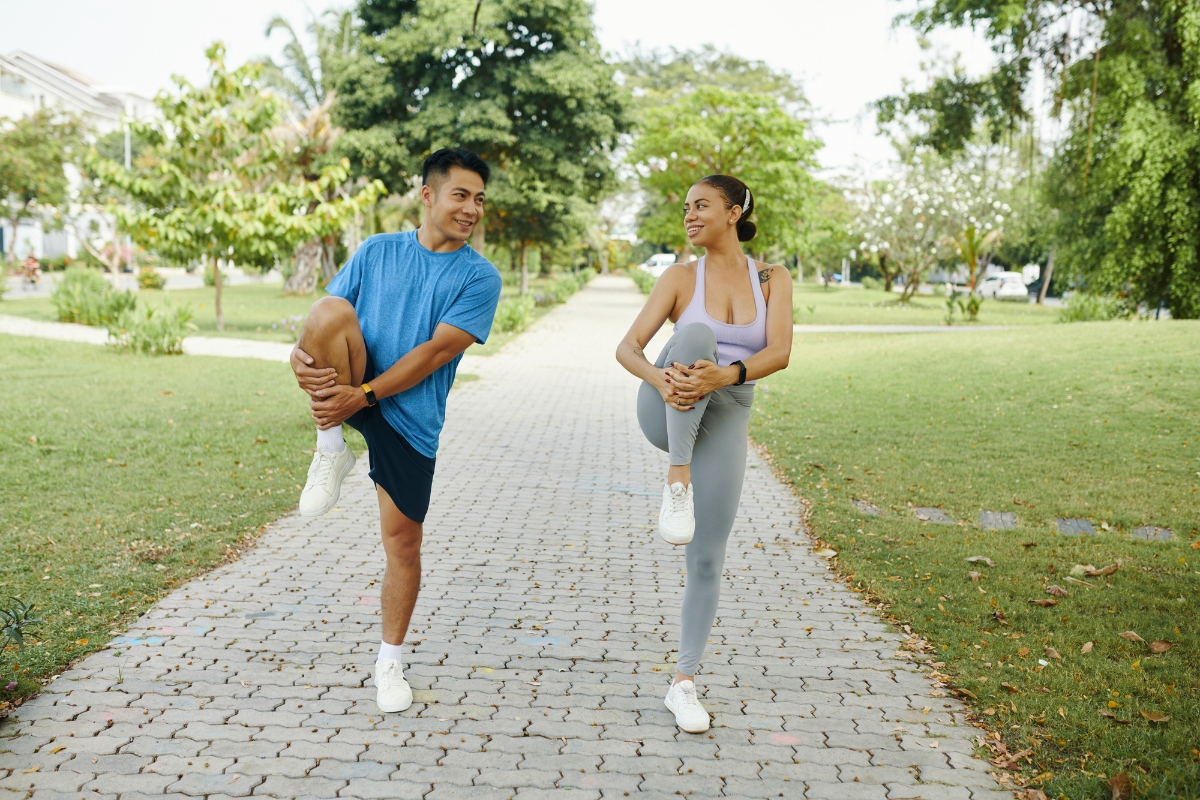
- Stand behind sturdy chair, hold for balance
- Slowly bend affected knee, bringing heel toward buttocks
- Keep thighs aligned—don’t let knee drift forward
- Hold 2-3 seconds at top
- Slowly lower (controlled movement)
- Repeat 10-15 times, 2-3 sets per leg
Why hamstrings matter: They work with quadriceps to stabilize the knee. Balanced front/back thigh strength reduces abnormal forces that accelerate arthritis.
5. Heel Slides — Flexibility Essential
All arthritis grades | No equipment

How to perform:
- Lie on back with legs straight
- Slowly slide heel toward buttocks, bending knee
- Go as far as comfortable—don’t force it
- Hold 5 seconds
- Slowly slide back to starting position
- Repeat 10-15 times, 2-3 sets daily
⏱️ Time Commitment: Complete routine takes 15-20 minutes. Perform 3-5 days per week for best results. Consistency beats intensity!
Charlotte & Lake Norman Climate Exercise Tips
Having treated thousands of Charlotte-area patients, I’ve learned our local climate significantly affects knee arthritis symptoms. Here’s how to adapt:

🌡️ Summer (June-September): Heat & Humidity Challenge
- Problem: 85-95°F with 70%+ humidity increases joint swelling
- Solution: Exercise 6-9 AM or 7-9 PM to avoid peak heat
- Hydration: Drink 16-20 oz water 2 hours before, 8 oz every 15 min during
- Best option: Charlotte Aquatics heated therapy pools (year-round)
🍂 Fall/Spring (March-May, Oct-Nov): Optimal Conditions
Best months for outdoor exercise — mild temps (60-75°F), lower humidity
Top Charlotte walking trails for knee arthritis:
- 🥾 Little Sugar Creek Greenway (Near Providence Road office) – Flat, paved, 19+ miles
- 🥾 Lake Norman State Park (Near Huntersville office) – Flat lakeside paths
- 🥾 McDowell Nature Preserve – Flat lake loops
❄️ Winter (Dec-Feb): Cold & Barometric Pressure
- Problem: 30-50°F temps cause stiffness; pressure changes trigger flares
- Solutions:
- 10-15 min warm-up (vs. usual 5 min)
- Heat therapy 15-20 min before exercise
- Keep knees covered (compression sleeves recommended)
- Indoor options: SouthPark Mall, Northlake Mall walking programs
Real Charlotte Patient Success Stories
These are actual patients I’ve treated (names changed for privacy):

Margaret T., Age 68 (Charlotte) — Grade 3 Arthritis
Before: Pain 7/10, could barely walk one block
Treatment: Adipose stem cell therapy + customized exercise program
Results at 12 months:
- ✅ Pain reduced to 2/10
- ✅ Walking 2+ miles daily on Little Sugar Creek Greenway
- ✅ Resumed gardening, playing with grandchildren
- ✅ Lost 18 pounds through increased activity
- ✅ Imaging shows improved joint space, reduced inflammation
“I came to Dr. Ahmad’s Providence Road office barely able to walk. Now I’m hiking at Lake Norman State Park with my family.”
Jennifer K., Age 62 (Matthews) — Bilateral Grade 3
Before: Facing double knee replacement, pain 8/10 both knees
Treatment: Bilateral stem cell therapy + 12-week progressive exercise + weight loss
Results at 18 months:
- ✅ Surgery indefinitely postponed (confirmed by orthopedic surgeon)
- ✅ Pain reduced 8/10 → 3/10
- ✅ Can take stairs normally (previously needed handrail step-by-step)
- ✅ Swimming 3x/week, walking 1.5 miles daily
- ✅ Returned to part-time work (previously on disability)
“The orthopedic surgeon said I’d need double knee replacement within a year. Dr. Ahmad’s treatment and exercise program gave me my life back. It’s been 18 months and I’m more active than I’ve been in 5 years.”
Combining Exercise with Regenerative Medicine: The Optimal Protocol
Research shows exercise before and after regenerative treatments produces significantly better outcomes. Here’s the exact protocol I use at our Charlotte and Huntersville locations:

📅 Integrated Treatment Timeline
2-4 Weeks BEFORE Treatment
- Begin gentle strengthening (quad sets, straight leg raises)
- Low-impact cardio 20-30 min, 3-4x/week
- Goal: Build baseline strength, improve blood flow
Week 1-2 POST-Treatment
- ✅ Gentle range of motion only
- ✅ Easy walking (10-15 min max)
- ❌ NO strengthening, stairs, or sports
Week 3-6 POST-Treatment
- Resume strengthening at 50% pre-treatment intensity
- Increase gradually each week
- Mild soreness OK, pain is not
Week 7-12 POST-Treatment
- Return to full exercise program
- Add functional activities (stairs, hills if comfortable)
- May resume sports with modifications
Month 4+ Maintenance
- Continue exercises 3-5x/week (becomes lifestyle)
- Maximum improvement typically at 6-9 months
- Follow-up imaging to document progress
💡 Why This Works: “In my experience with thousands of procedures, patients who follow this exercise timeline show 40-60% better outcomes at 1-year follow-up compared to treatment alone. Exercise isn’t optional—it’s essential.”
When Exercise Isn’t Enough: Your Next Steps
Use this guide to determine if you need advanced treatment:
🔀 Treatment Decision Guide
✅ CONTINUE EXERCISING if you experience:
- 30%+ pain reduction after 8 weeks
- Improved walking, stairs, or daily activities
- Reduced need for pain medication
- Better sleep quality
Action: You’re on the right track—maintain consistency!
⚠️ CONSIDER PRP THERAPY if:
- Less than 30% improvement after 8+ weeks
- Progress has plateaued
- Still relying on daily pain medication
- Limited by pain in work or hobbies
Action: Schedule free consultation for PRP therapy
🚨 STEM CELL CONSULTATION URGENT if:
- No improvement or worsening despite 8+ weeks exercise
- Pain preventing sleep
- Significantly limited in daily living
- Surgeon recommended knee replacement
- Grade 3-4 arthritis on imaging
Action: Call (704) 542-3988 today for stem cell therapy consultation
Low-Impact Cardio for Charlotte Residents
Cardiovascular exercise supports overall health and weight management. Here’s what I recommend to Charlotte and Lake Norman area patients:

🏊 Swimming and Water Aerobics (Best Overall Option)
Charlotte Area Pools:
- Charlotte Aquatic Center (outdoor, seasonal)
- Levine JCC (heated indoor pool, arthritis programs)
- YMCA locations (multiple Charlotte/Huntersville sites)
- Lake Norman YMCA (near our Huntersville office)
🚴 Stationary Cycling
Seat Adjustment Tip: Your knee should have 5-10 degrees of bend at the bottom of the pedal stroke
🚶 Walking Recommendations
Best Charlotte Walking Locations:
- Little Sugar Creek Greenway (flat, paved, 19 miles)
- McAlpine Creek Greenway (8 miles, minimal elevation)
- Lake Norman State Park lakeside trails
- Indoor options: SouthPark Mall, Northlake Mall (climate-controlled)
Frequently Asked Questions
How long before I see results?
Most Charlotte patients notice 20-30% improvement within 4-6 weeks. Maximum benefits occur at 8-12 weeks. Grade 3-4 arthritis may need 12-16 weeks. Track progress weekly using a pain journal.
Can exercise reverse arthritis or just manage symptoms?
Honest answer: Exercise cannot reverse bone spurs or regenerate lost cartilage. However, it CAN slow progression, reduce inflammation, strengthen supporting structures, and dramatically improve function. When combined with stem cell therapy, these outcomes are more pronounced and can potentially delay surgery.
My surgeon said I need knee replacement. Can stem cells help me avoid surgery?
Sometimes yes, sometimes no. If you have Grade 4 bone-on-bone arthritis with severe deformity, surgery may be unavoidable. However, I’ve helped many patients delay surgery 2-5+ years using stem cell therapy plus exercise. Some avoid surgery entirely. Schedule a consultation so I can review your imaging and give honest guidance.
I’m overweight. Should I lose weight before starting these exercises?
Start exercising NOW—don’t wait! These exercises are safe for all body weights. Weight loss is important (every pound lost removes 4 pounds of pressure from knees), but exercise helps with weight loss. Start with pool exercises if weight-bearing is too painful. Many heavier patients see best results exercising AND focusing on nutrition simultaneously.
What’s the success rate combining exercise with regenerative medicine?
Tracking outcomes from Charlotte and Huntersville offices: Patients who combine stem cell therapy with consistent exercise show 70-80% significant improvement at 1-year follow-up (>50% pain reduction and meaningful functional gains). Those who get treatment but don’t exercise: only 40-50% lasting improvement. Exercise isn’t optional—it’s essential for optimizing results.
I have arthritis in both knees. Should I exercise both equally?
Exercise both knees equally! Approximately 60% of my Charlotte patients have bilateral arthritis. Favoring one knee creates compensatory problems and muscle imbalances. Your “good” knee will eventually become worse if it’s doing all the work. Bilateral stem cell or PRP treatments are also common at our clinics—we can treat both knees in the same visit.
Take Control of Your Knee Arthritis Today
Managing knee arthritis effectively requires commitment, consistency, and sometimes professional intervention. These exercises, developed through my experience treating thousands of Charlotte and Lake Norman area patients, provide a solid foundation for reducing pain and improving function.
Key Takeaways:
- ✅ Match exercises to your arthritis severity (Grades 1-4)
- ✅ Consistency beats intensity—3-5 sessions weekly
- ✅ Give it 8-12 weeks minimum before evaluating effectiveness
- ✅ Adapt to Charlotte’s climate (heat, humidity, cold)
- ✅ Know when to seek help—if exercise alone isn’t working after 8+ weeks
- ✅ Exercise + regenerative treatments produce best long-term outcomes
Ready to Take Control of Your Knee Arthritis?
Schedule a free consultation with Dr. Ahmad to discuss your personalized treatment plan.
📍 Two Convenient Locations:
8035 Providence Road, Suite 340
Charlotte, NC 28277
Near Arboretum Shopping Center – Free on-site parking in the Arboretum business park
View Location Details & Directions →
9920 Kincey Ave, Suite 200
Huntersville, NC 28078
Lake Norman Area
View Location Details & Directions →
Proudly Serving: Charlotte, Huntersville, Cornelius, Davidson, Matthews, Ballantyne, Lake Norman, Concord, Gastonia, and surrounding Mecklenburg County areas
About Dr. Usman Ahmad
Dr. Usman Ahmad, DO is a board-certified physician in Physical Medicine and Rehabilitation (PM&R) with advanced fellowship training in Interventional Sports and Spine Medicine. With over 25,000 procedures performed, Dr. Ahmad is one of Charlotte’s leading experts in non-surgical orthopedic treatments.
He specializes in adipose-derived stem cell therapy, bone marrow derived stem cell therapy, PRP therapy, shockwave therapy, and ultrasound-guided regenerative procedures. His advanced imaging expertise allows him to diagnose conditions with precision and deliver treatments with accuracy that maximizes patient outcomes.
Education & Training: Board Certified Physical Medicine and Rehabilitation | Fellowship: Interventional Sports and Spine Medicine | Advanced Training: Regenerative Medicine, Ultrasound-Guided Procedures | 25,000+ Procedures Performed
Medical Disclaimer: This content is for educational purposes only and does not constitute medical advice. Always consult with a qualified healthcare provider before beginning any exercise program, especially if you have existing health conditions. Individual results may vary.
FDA Disclaimer: Stem cell therapy and PRP therapy benefits have not been reviewed or approved by the FDA. These treatments are not intended to diagnose, treat, cure, or prevent any disease.